• Home
  • About
  • Gallery

Virtual Worldfest 2021 Gallery

Alexa Patnaude


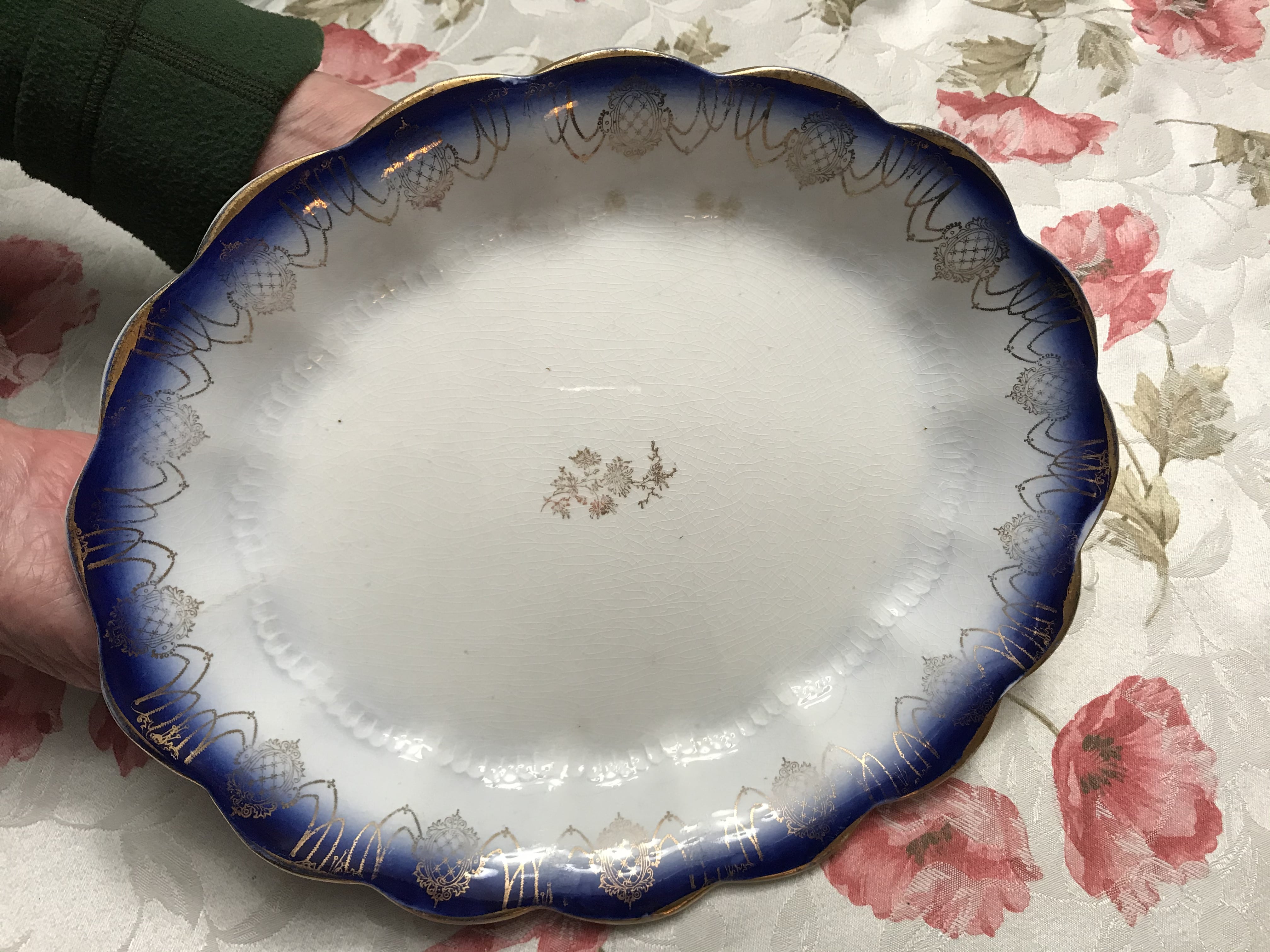
"This bowl is a handcrafted piece of English Pottery from the 1800s. It was bought by my 3rd great grandmother when she was living in England, and has been passed down my family as an heirloom. Pottery was, and still is, a form of art, and was bought for the purpose of decoration. From the day it was bought to this present day, it has been on display and as symbol of our British heritage, displaying the beauty of its craftmanship."

Kevin John


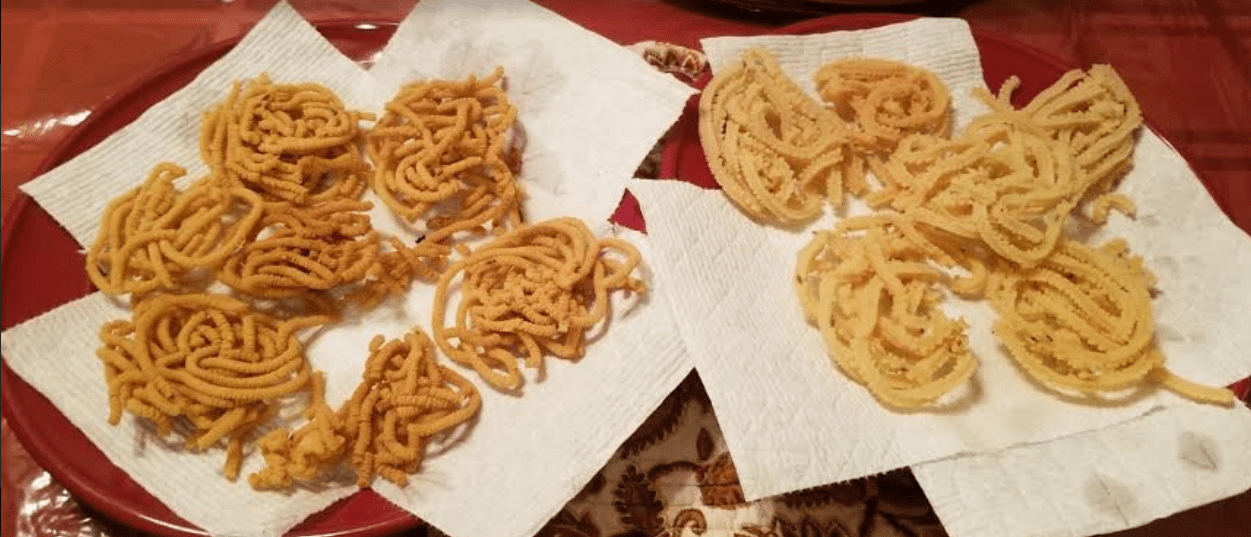
"Murukku: Deep fried Indian crunchy snack made with rice flour and gram flour.

Jaylin Smith


"This is a picture of me standing with a few Conchero dancers in Mexico after watching a beautiful performance called “Concheros” or the “Chichimecas”! The Concheros dance is a Mexican ritual that originated in 1522, and is primarily performed at seasonal festivals in northern Mexico City. The dance includes gorgeous floral decorations and lively music. The Conchero lute, which is an instrument played during the ritual, was implemented into the dance as a sign of Spanish influence. Though the Spanish had a heavy impact on the ritual, it was created to maintain ancient Colombian ritual after the Spanish conquered the Chichimeca tribe."

Justin Liang


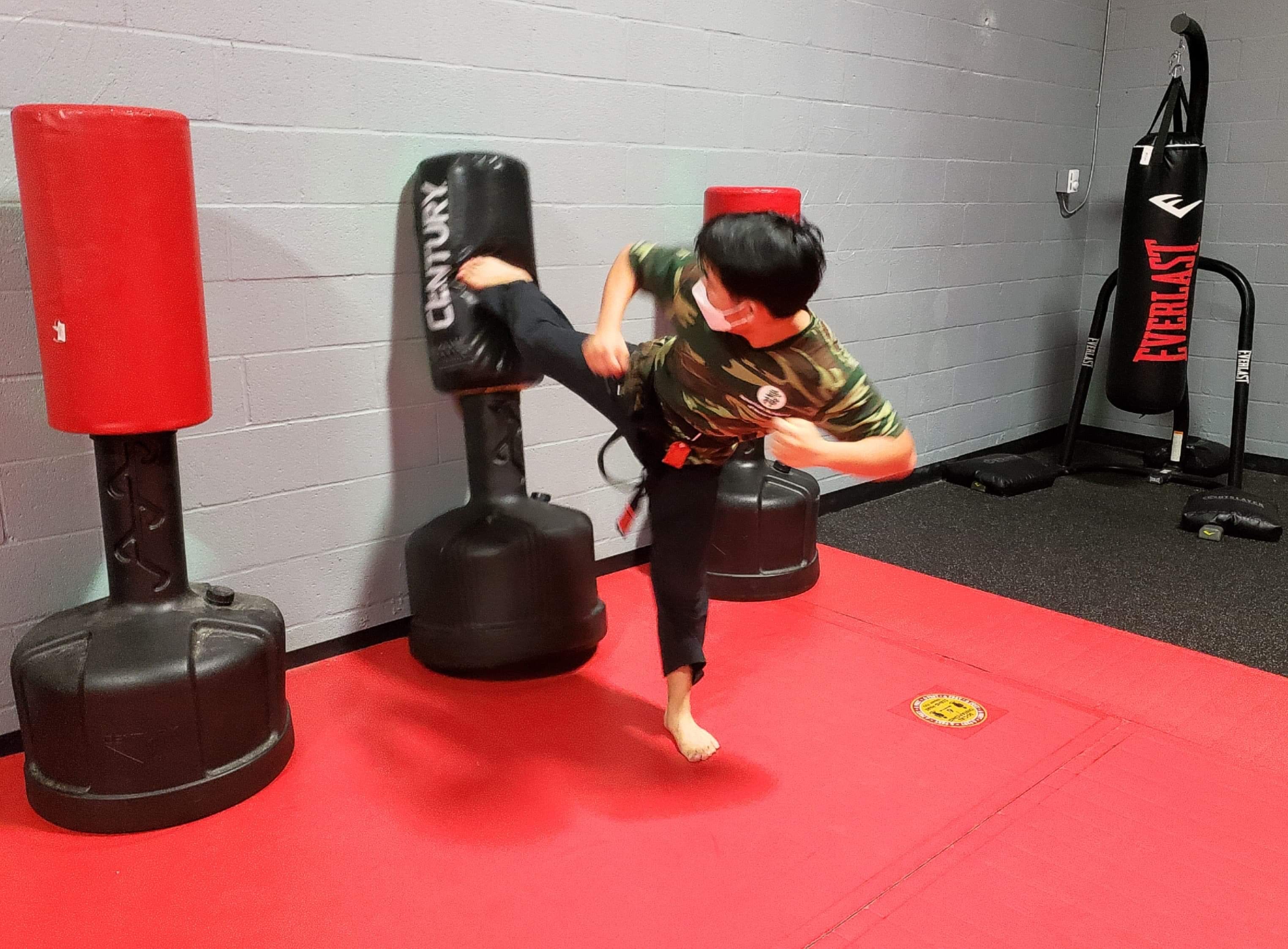
"This is a picture of me practicing a step behind side kick, one of the numerous kicks taught in the Bujinkan Art. Bujinkan "Budo" Taijutsu is a Japanese based martial art that involves techniques that focus on disabling an aggressor as efficiently as possible. Martial arts has been a part of Japanese culture for hundreds of years, with many of the techniques taught in Bujinkan dating back to the samurai era. While martial arts was primarily used on the battlefield and in self defense, it was also comprised of a moral code called Bushido that a samurai must follow, with contemporary forms of Bushido still existing in modern Japan today."

Lucas Jacob


"My family and I took a trip to Kenya about two years ago. We usually go once a year or every other year, but because of corona we were not able to this year. These paintings, jewelry, and wood carvings are all apart of the Masai warriors in Kenya. They live on the Masai Mara which is a savannah National Reserve park and they are well known for their jumping ability. They hold contests for jumping in order to show their strength. Additionally as a coming-of-age ritual they must kill a lion, which they do in about a group of 10. The necklace shown has a lions tooth from one of the lions that they killed. The wooden baton is called a lion stick, but this one is more for decoration rather than actual use."

Francesca Cumello


"I submitted an image of gnocchi bolognese with spinach, which is an Italian dish that is very frequently made in my family. Gnocchi dates back to around 9000 BCE, not attributed to a single location. Its original name was "gnocco," which means "node" and can also refer to "knuckles" -- referring to the shape of the pasta. Gnocchi began using potato as a primary ingredient in the 16th century when they were brought from the Americas. Prior to the introduction of potatoes in Europe, gnocchi was comprised of cold water and flour. My family is from Sicily, and the region of Italy is now responsible for roughly 50% of the country's potato production (potatoes are mostly grown in Southern Italy). Over the centuries, people have experimented with its ingredients, adding other flours such as cornmeal and seminola as well as other foods (eg. spinach and pumpkin). Bolognese, also known as ragú, is a meat-based sauce that is used as the main flavor component to many pasta dishes, and originated in Bologna, Italy. It is not typically served with gnocchi (rather with lasagna or tagiatelle), but it is typical of Italian-Americans to mix components of Italian cuisine. Gnocchi alla bolognese is a dish that combines multiple aspects of Italian cuisine and is a significant part of my family's meal repertoire."

Kelsey Genovese


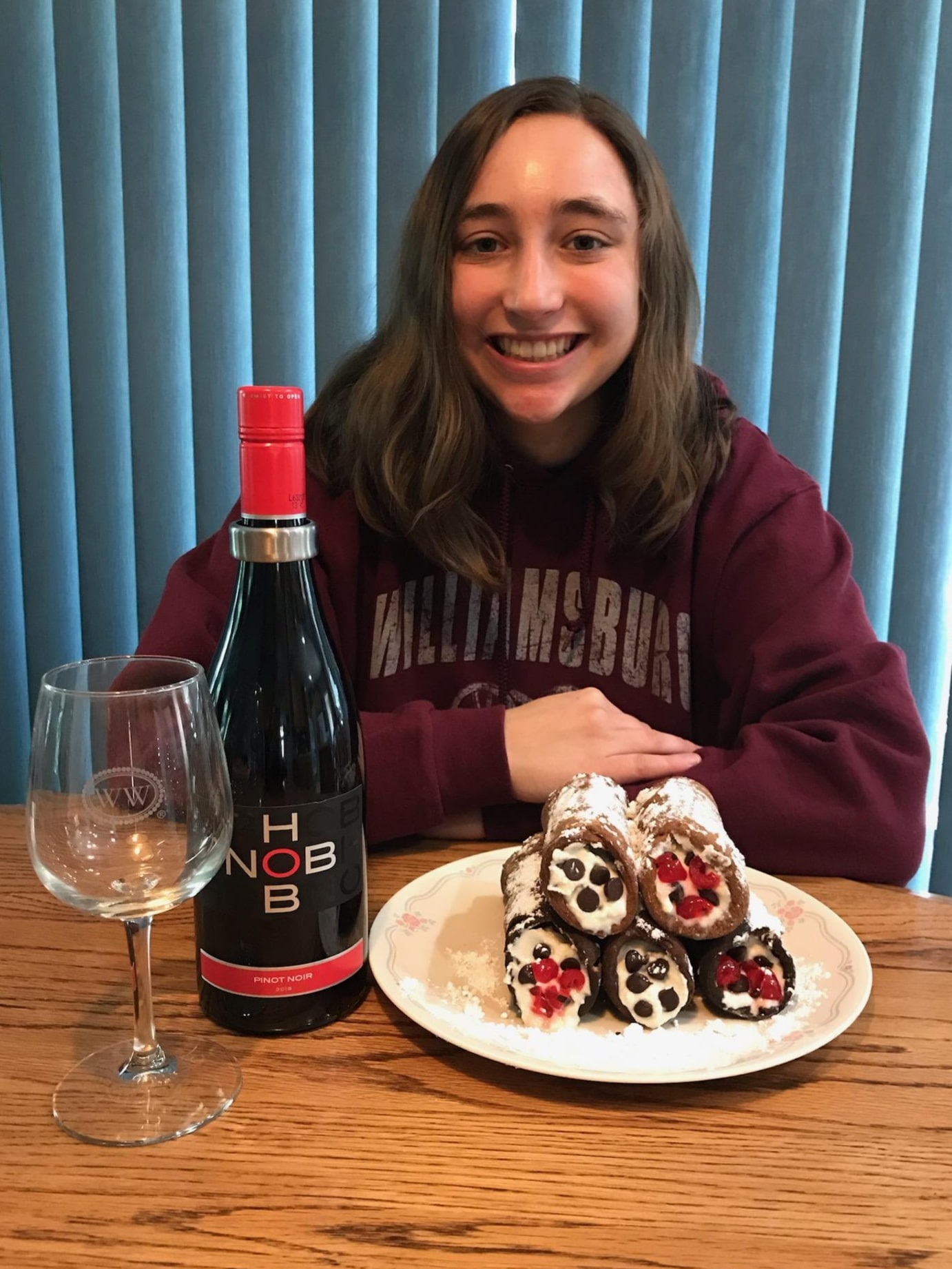
"I made cannoli to celebrate the culture of Sicily Italy, the island my ancestors emigrated from. Sicily is well known for its cuisines and wine, so it's no wonder they call it God's Kitchen! The most famous part of Sicilian cuisine is the pastry dishes, notably cannoli (means "little tube" in Sicilian). Cannoli are tube-shaped fried pastry shells with a filling usually made with ricotta but can be custard as well. For toppings, I sprinkled chocolate chips throughout the ricotta and added candied fruit on the ends. Cannoli were historically prepared to celebrate the Carnevale, a festival that takes place in Italy before Lent begins. Sicily is also one of the largest wine producers in Italy and is known primarily for Marsala wines, which is used in making cannoli shells."

Diego Montemayor


"This is lotería, or "lottery" translated from Spanish. It is a traditional game of chance like bingo that is played in Mexico at events like parties or fairs. Traditional lotería is played on 4 x 4 boards of tiles that each correspond to a card. The cards are essentially the equivalent of the balls in bingo and are randomized through shuffling. A card is drawn from the top of the deck and read aloud, at which point players must mark their spot on their board if they have the same picture on their board. Usually each card shows a different person, object, or animal and players mark the board with uncooked beans, however actual plastic pieces have been used more in recent years. The winner can be determined in a multitude of ways, the most common being the first person to get 4 in a row or sometimes the first person to fill their board, depending on how the players wish to play the game. The specific version of lotería shown in this image is a version that pictures the many different jobs and activities in pre-Columbian Mexican societies, such as the Maya and the Aztec peoples. It also uses grains of maize as marking pieces to recognize the importance of this product to these ancient societies."

Annabel Rose


"For my submission, I chose my great-grandmother’s Albanian cookbook. My mom immigrated to the US from Albania when she was 22, and this was one of the items she brought from home. Especially right now, when we can’t travel, cooking Albanian food is one of the biggest ways my family maintains ties with our culture and relatives. A few of the pages I added pictures of are some of my family’s favorite recipes: The first is pastiço, a pasta-like dish that my sister loves, the second is petulla, a pretty basic type of fried dough that can be used for sweet or savory desserts and appetizers, and the last is byrek (probably what we make the most), and it’s basically a filo-dough casserole that usually includes leeks and other vegetables. In my visits to Albania over the years, I’ve always noticed that food is used as a method of hospitality and respect. There seems to be an unspoken rule that a guest’s plate can never be left empty, and the medieval Albanian code of honor (the Best) mandates that guests and strangers are looked after with gratitude (often expressed with invitations to meals!)."

Timothy Woerner


"I am submitting a photo of Greek Dolmades. My family is Greek and loves to both eat and prepare this meal, so I used WorldFest as an opportunity to prepare it myself to show to others. Dolmades are a traditional Greek food composed of grape leaves stuffed with rice and meat topped off with avgolemono sauce (a traditional greek sauce made of lemons and eggs). The origins of Dolmades are quite unclear. Although unlikely, some like to believe they may date back to 335 BC when Alexander the Great besieged Thebes causing a shortage of food. It is said the Thebans began to wrap the little meat they had in leaves, thus creating the first dolmades. A more likely origin may result in creation coupled with increasing popularity during the Ottoman Empire that likely spread to both Turkey, Greece, and other neighboring countries after the fall of the Empire. Such an origin would demonstrate the cultural similarities between Turkey and Greece that are specifically seen in cuisine."

Krystal Wu


"This is a video of a view that I took from the mountains of Yangmingshan National Park (陽明山國家公園), one of nine national parks in Taiwan. It is the only park in Taiwan with hot springs and volcanic geography. Yangmingshan is situated between Taipei and New Taipei City on the northern edge of the Taipei basin. During the Qing Dynasty and Japanese occupation of Taiwan, officials frequently set fire to the mountain range in attempts to protect its rich sulfur deposits from thieves. As a result, Yangmingshan was referred to as Caoshan (草山), or “Grass Mountain,” due to its abundance of grass and lack of trees. After World War II, Yangmingshan was given its name to commemorate Wang Yang Ming, a famous Chinese scholar of the Ming Dynasty. Natural resources and scenery of Yangmingshan also began to undergo planned development and utilization. Today, Yangmingshan is known for its hot springs, diverse wildlife and vegetation, sulfur crystals, and hiking trails. "

Sarah Arcuri


"I chose to create Italian-inspired crepes for my submission. Crepes are a prominent aspect of both French and French-Canadian cuisine. My family and I grew up very close to friends who were French, so I was immersed in their culture and cuisine from a young age. My family is Sicilian, so Italian cuisine has always been present in our household. I decided to create a dish that combines both aspects of these cultures that are familiar to me. My French-Italian fusion crepe consists of an oregano batter, filled with rosemary prosciutto cotto, kale, spinach, and both mozzarella and parmesan cheeses. I topped the crepe with dried basil from a local organic market. Although the flavors were different than traditional crepes, I really enjoyed the Italian twist. "

Jake Smith


"For Worldfest, I am submitting an image of sauerkraut and kielbasa that I prepared. Sauerkraut and Kielbasa is a cultural dish that originally from Germany. In general, this dish is thought to bring good luck when eaten. This tradition was brought over to Pennsylvania and Ohio by German immigrants and has been widely adopted. Within my family, we eat sauerkraut and kielbasa every New Years Day in order to bring good luck in the New Year. In terms of making this dish, the process involves adding sauerkraut, kielbasa, and brown sugar to a roaster and cooking inside of the oven. Recipes differ from region to region. "

Naomi Chao


"Pictured here is 火锅, or hotpot, a main dish popular in China. Hotpot is prepared by placing raw ingredients in a pot of hot broth and cooking the ingredients. The ingredients are cut into thin slices to reduce the cooking time. Oftentimes, we eat the cooked food with dipping sauce (as you can see in the upper left hand corner of this picture). With hot pot, there are endless variations of this dish. Starting with the soup base, popular broth flavors include spicy, tomato, herbal, mushroom, and pork bone. My personal favorite is mushroom broth; however, because the rest of my family love spicy broth, we compromise with the tomato broth! My family likes to put enoki mushrooms, baby bok choy, shrimp, lamb and beef slices, and fish balls in our hot pot. However, many more foods can be enjoyed with hot pot such as tofu, mussels, duck blood, and beef aorta. Just like how there are numerous broth variations and ingredients, one can create their unique dipping sauce from popular condiments such as soy sauce, sesame oil, chili powder, and oyster sauce. My go-to dipping sauce takes a combination of sesame paste, peanut butter, and a tad bit of soy sauce, giving the sauce a tangy flavor that enhances the overall hot pot experience. And that is exactly what hot pot is: it is more than just a dish, it is an opportunity for friends and family to sit around a pot and relax while talking. As a child, gathering around the table for dinner was a central part of my family (and is important in Chinese culture). However, as we grew older, because of my sister and I’s different practice times, my family rarely had the opportunity to eat dinner at the same time. Hotpot gives my family the chance to come together as a family. "

Mary Maciorowski


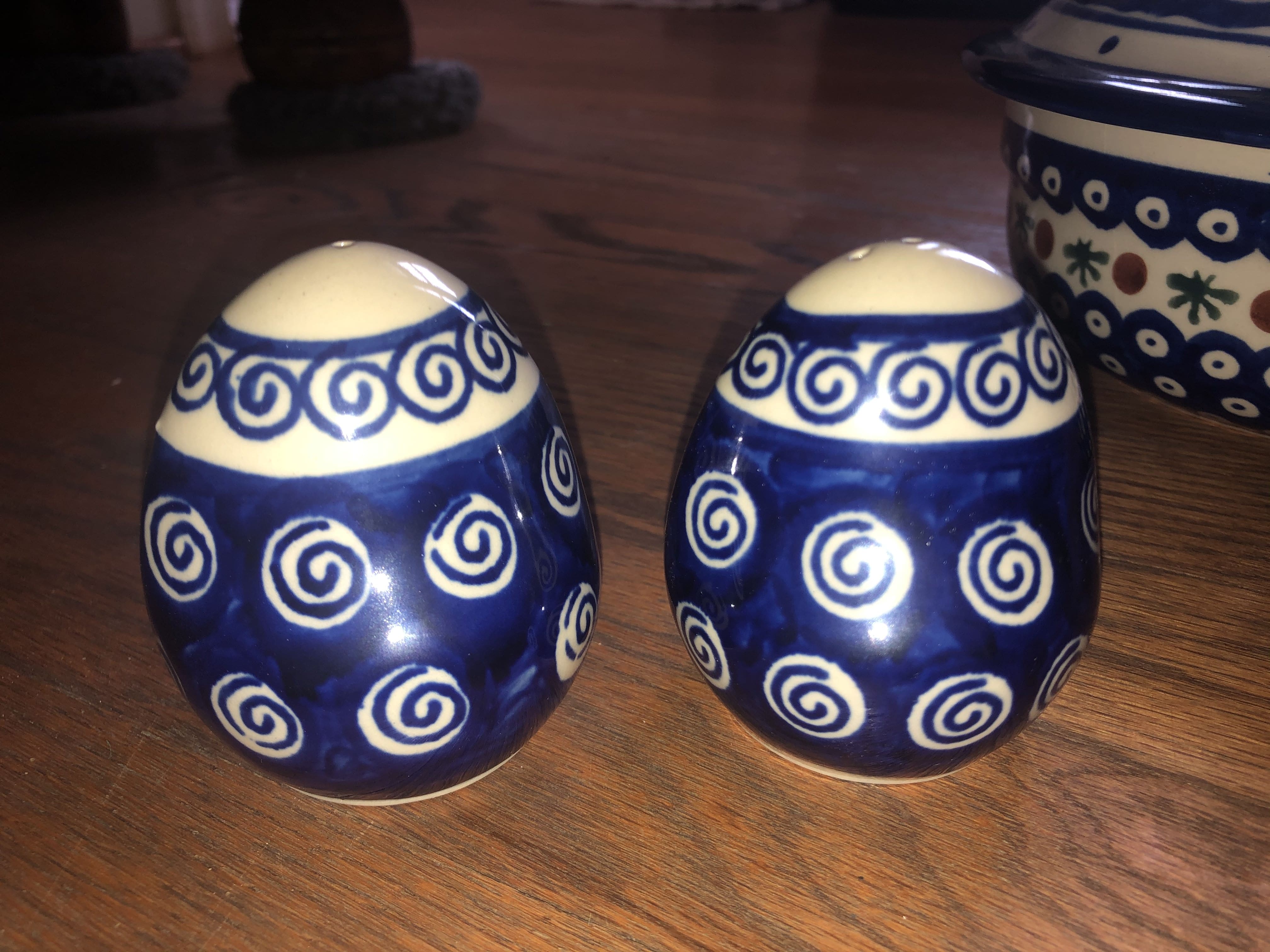
"The items that are displayed in the picture are handcrafted pieces of Polish pottery. As my ancestors are from Poland, these pieces have significance to my origins and family history. All of the pottery was made in Poland and was passed down from my grandparents to my family. The history of Polish pottery dates back to 6,000 B.C. and has roots in the town of Boleslawiec. The pottery pictured embodies the traditional patterns as they are inspired by the peacock and have the royal blue color. In Europe, peacocks are seen as a symbol of royalty and wealth, which inspired the ceramic artists to base their pottery on the designs and patterns of a peacock. The peacock patterns usually include swirling and circle designs."

Prakhya Chikkem


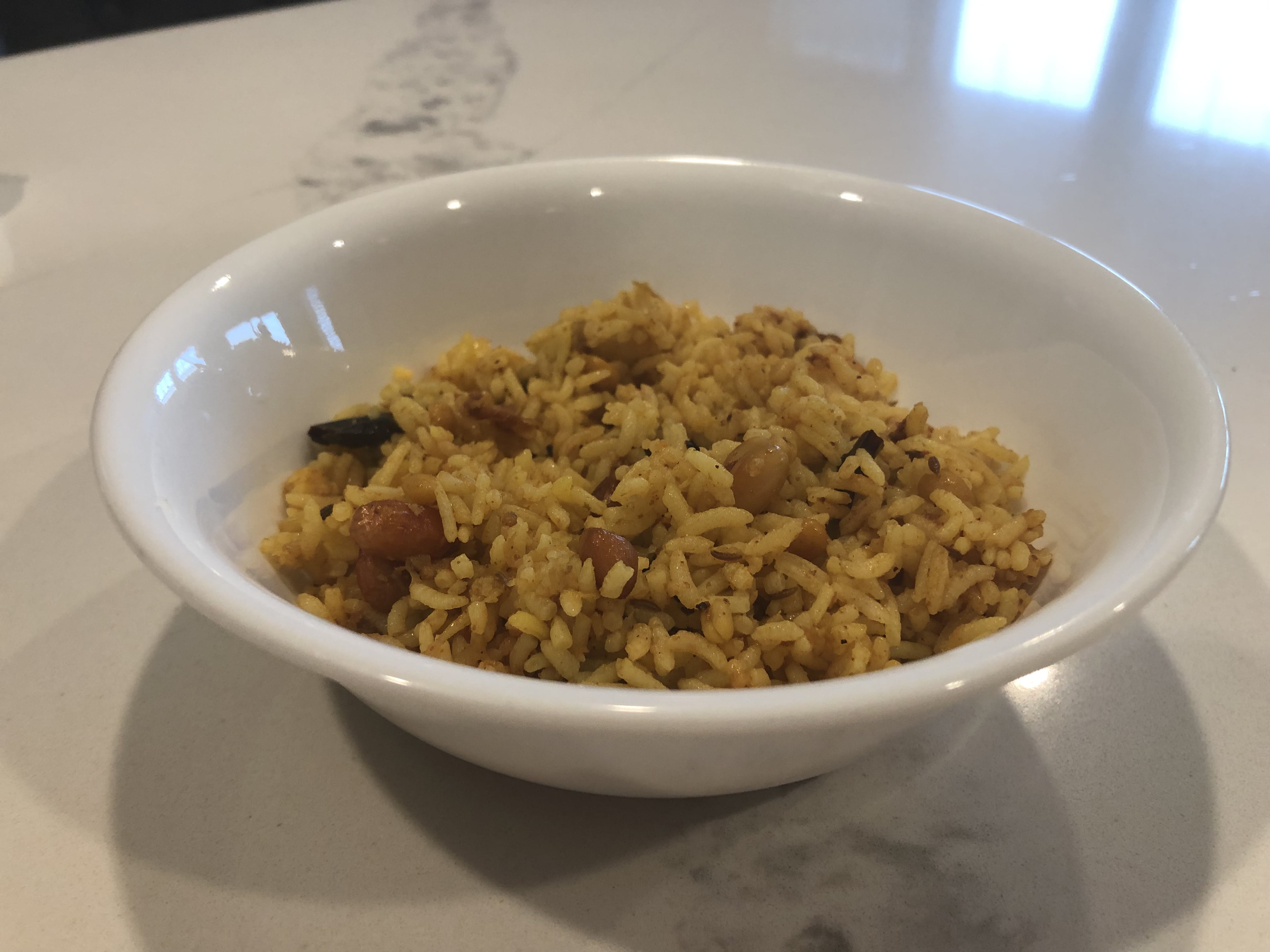
"The dish featured in the picture is a tamarind rice dish that originates from India; different regions of India give this food different names, some including Pulihora and Puliyodarai. This dish is made by mixing in rice with lemon or tamarind juice, along with some Indian spices and peanuts. Tamarind rice is often made on Indian festivals and is eaten as a meal for breakfast, lunch or dinner. Moreover, during religious festivals, tamarind rice is often made as prasadam, or a religious offering to the God. Therefore, this dish is also commonly served at temples. "

Kate Tourison


"This is Irish Stew! This dish is recognized as Ireland’s national dish, a wholesome meal which can be traced back to the early 1800’s. Traditional Irish Stew was originally known as “peasant food,” made from whatever animals and crops were most readily available. The meat-vegetable mixture most often consisted of lamb or mutton, potatoes—unsurprising considering the abundance of potatoes being farmed during this time period—onions, and other root vegetables. In later years, the original recipe was brought to the Americas and evolved to cater to more accessible ingredients. Today Irish Stew is sometimes made using beef, carrots, turnips, barley, and even beer! I’ve grown up eating my grandmother’s Irish Stew—her ancestors were from Donegal, Ireland. "

Alexander Burke & Max Middleton


"My partner and I submitted a poster on the country of Spain. Throughout our first stages of research, we uncovered so much about this country. From its history to its culture and language we were able to see what a multifaceted country this was and, along with that, how it was intertwined in some of the most pivotal moments in history. A poster seemed like the right fit to uncover some, of their voluminous history. Thus, why we started our design by lining the bottom of our poster with a brief timeline. From the infamous duet of Ferdinand and Isabella hiring Columbus and kicking of the Golden age, to Spain's fall around the time of the War of Spanish succession. They set the precedent and drove other countries to develop and compete. Without Spain who knows where development, colonization, and infrastructure would be during this time. This is not even addressing their strength in the Catholic realm. With Spanish kings and their thrones not only holding political power but, resembling and standing for the ancient catholic church it was only right that we included catholic holidays like Corpus Christi, All saints day, and more. Their culture was and is such a big part of this country and the world with people globally learning the Spanish language, consuming Spanish Foods, and even watching Spanish teams and players dominate in the Football leauges."

Lindsay White


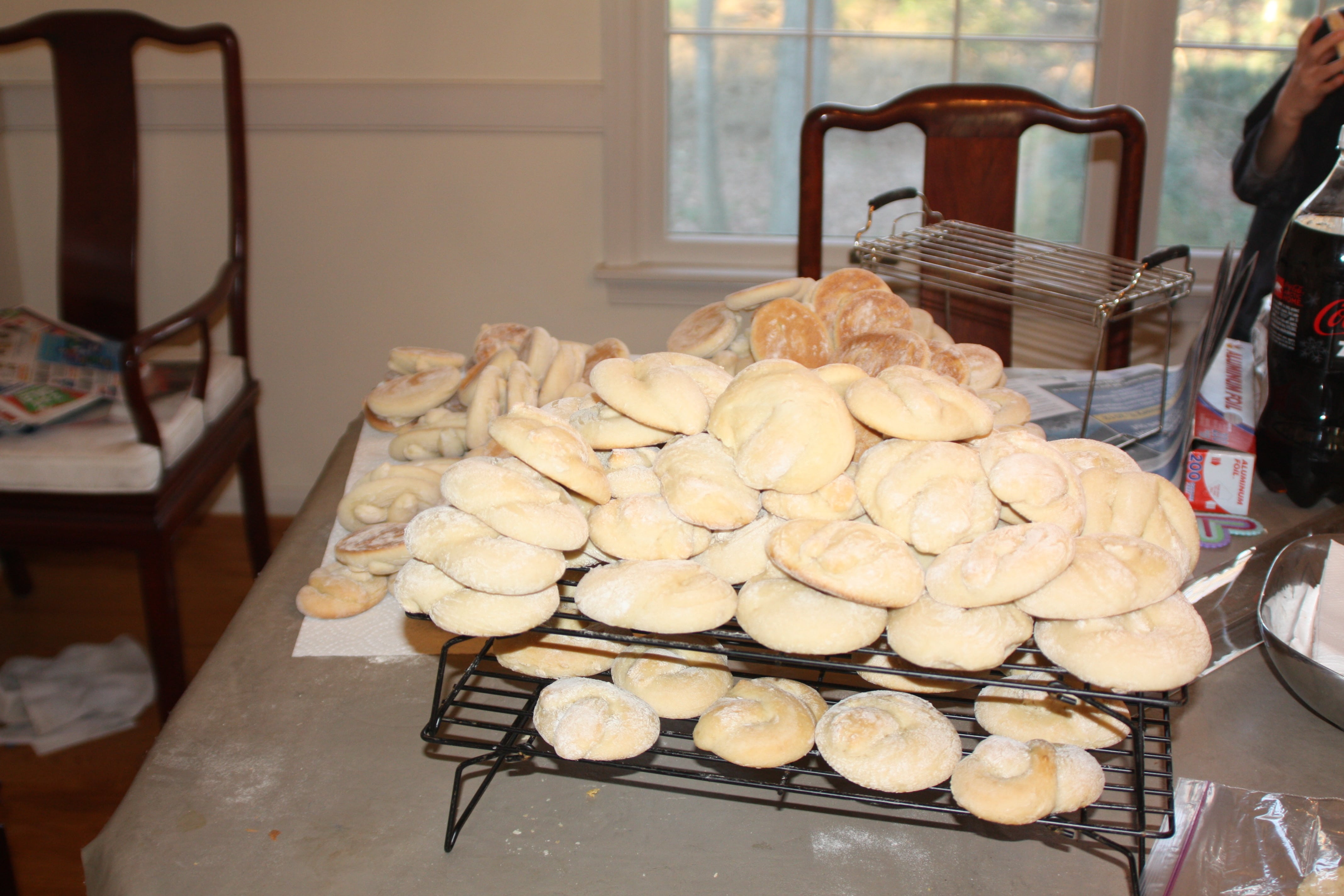
"This is a picture of kringlas, which are traditional Norwegian holiday cookies. They are made mainly with flour, sugar, butter, and sour cream, and taste similar to a sweet bread. They are very simple cookies and are typically made in a pretzel or figure-eight shape. Kringlas originated from Roman Catholic monks in the 13th century."

Tejaswi Datla


"For my Worldfest submission I have chosen to submit a picture of me in traditional Kuchipudi Dance attire. Kuchipudi is one of many South Asian classical dance forms that originated in the 17th Century, in the Indian state of Andhra Pradesh. The dance form is based in Hinduisim and contains many references to ancient mythology. It was often performed in temples and is seen as a form of storytelling and worship. You can expect a traditional Kuchipudi performance to contain many instruments, singers, and dancers. These dancers will also usually wear extravagant makeup along with intricate with jewelry. Personally, Kuchipudi means a lot to me. I have been learning this dance form for seven years now, and admit that it has taken a lot of passion, effort, and dedication for me to learn it. This particular dance is also very important to me since it connects me back to heritage and roots, allowing me to gain a deeper understanding of my culture."

Emma Bush


"This is a video of the process of making Maisir Wat which is a stew featuring spiced red lentils. This dish is an Ethiopian staple throughout the country and it's defining spice "berbere" is featured in many Ethiopian dishes. Not only is berbere an important ingredient in Misir Wat but also in Ethiopia's national dish (a chicken stew) as well as the popular condiment "awaze." This spice mix consists of powdered chili pepper and often includes fenugreek, cinnamon, coriander, nutmeg, and cloves. This blend is thought to have originated from the time that Ethiopia controlled the route from the Silk Road to the Red Sea. This connection provided them with unique spices that they learned to incorporate into their cuisine and continue to use to this day."

Bailey Carpenter


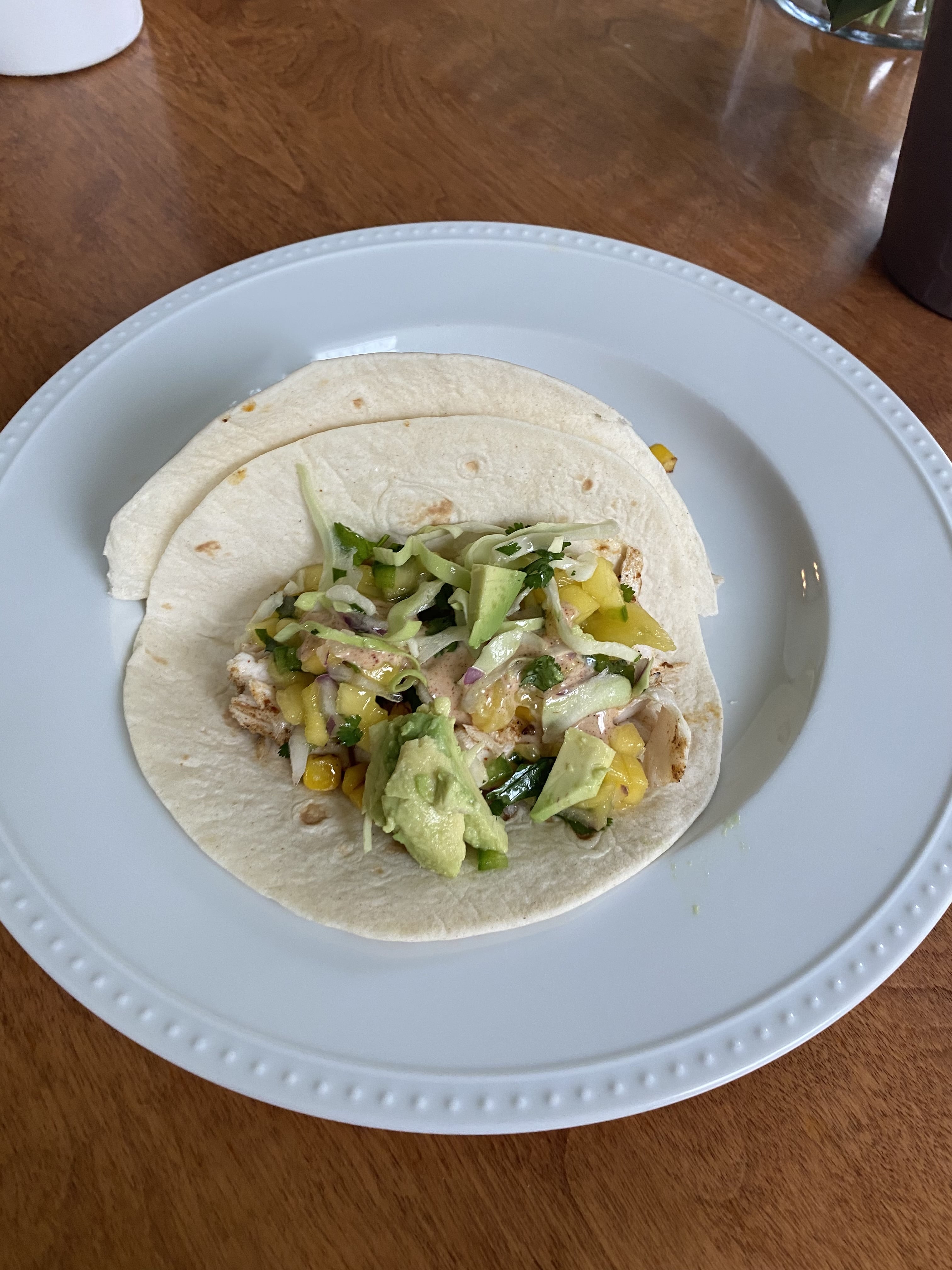
"Fish tacos are integral when visiting Baja, Mexico. They are a good quick, on the go, but still delicious food enjoyed by everyone. From tourist, surfers, and everyone in between, fish tacos are a gathering point for many. When the Spanish took over parts of Mexico, they created a lasting impact on the culinary influence. Once the Spanish ended up leaving, their food parties stayed in Baja. Asian and European countries listed Baja, so all of the cuisine combined created the fish tacos. In its simplest form, fish tacos begin with a corn tortilla, filled with fried fish, topped with classic Mexican toppings. Since the birth of fish tacos, it has spread from California, to all over the world."

Brandon Du


"I played an arranged version of the Soviet National Anthem for two violins."

Ethan Li


"The food pictured below is one of the most iconic types of Chinese food there are: steamed dumplings, or jiaozi. Not to be confused with other types of dumplings, like fried dumplings (or potstickers)! These bite-sized delicacies are commonly paired with some mixture of soy sauce and oil, which serve as a sauce to dip the dumplings into before eating. They originate from the Eastern Han dynasty of ancient China (about 200 years ago!), where they were used to treat frozen ears. That's why they look similar to ears! Nowadays, as far as I understand, it's some sort of "rite of passage" for every Chinese kid to learn how to wrap dough around the dumpling filling, creating the dumpling in a process known as "bao jiaozi"."

Julia Ye


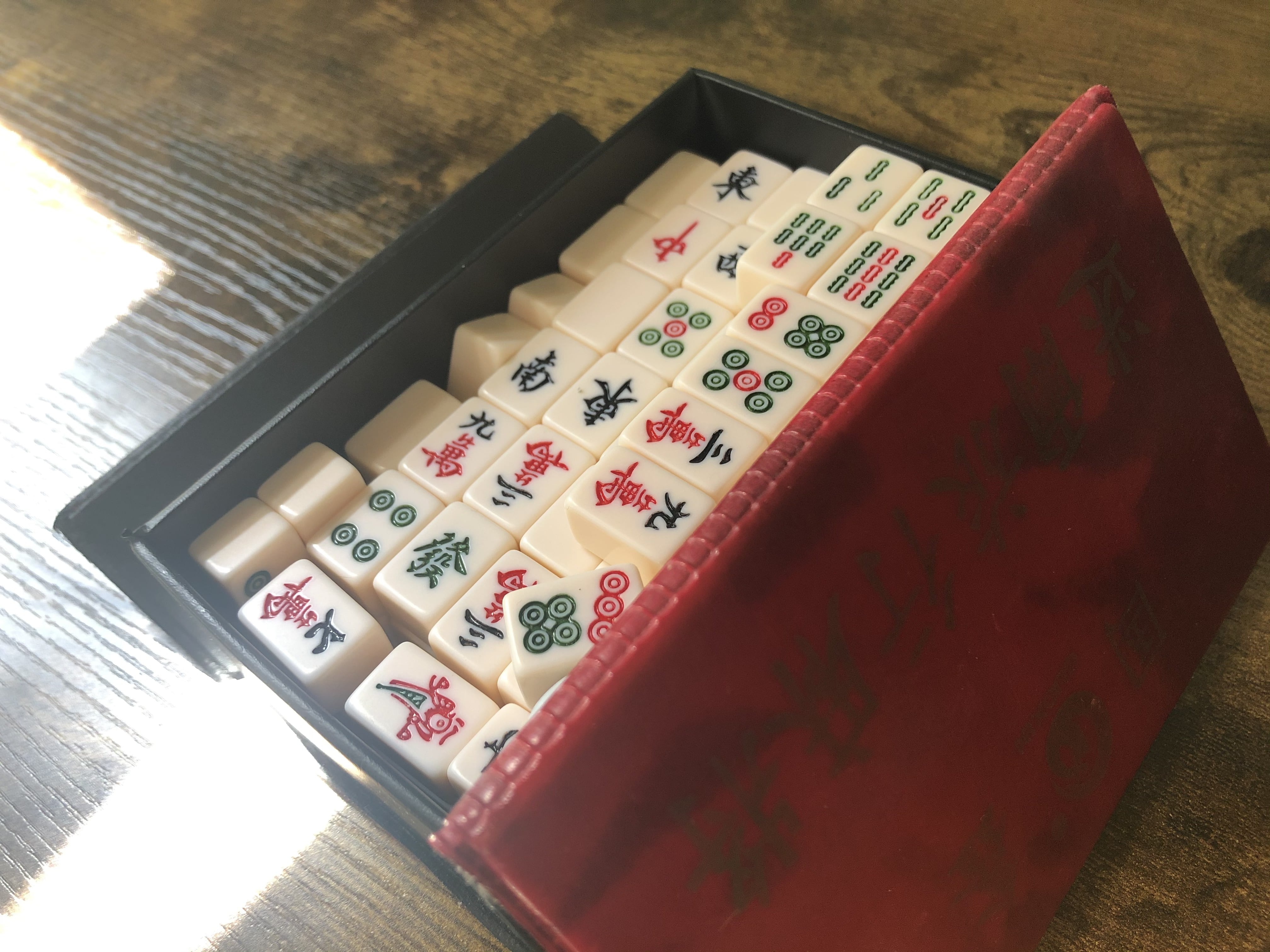
"This box is filled with mini Mahjong tiles. Mahjong is a Chinese game traditionally played with a set of tiles like the ones pictured, and your goal is to be the first to match all your tiles. Mahjong was developed as early as the Qing dynasty in ancient China, and it remains a very popular game worldwide. It usually requires 3-4 players, so my family and I would often play it with friends and relatives when we visited them in China.My family and I are making a Tanjore painting of the Hindu God Ganesha. Ganesha is from Hindu Mythology and many people pray to Ganesha to help with overcoming obstacles. The process of making a Tanjore painting requires a lot of steps. First we draw a sketch with pencil on the canvas. Then we add a layer of soft clay and some gems and wait for it to harden. Then chip away at the harden clay and add a layer of gold paper(as shown in the pictures). Finally we paint and add some color!I played an arranged version of the Soviet National Anthem for two violins."

Arjun Gupta


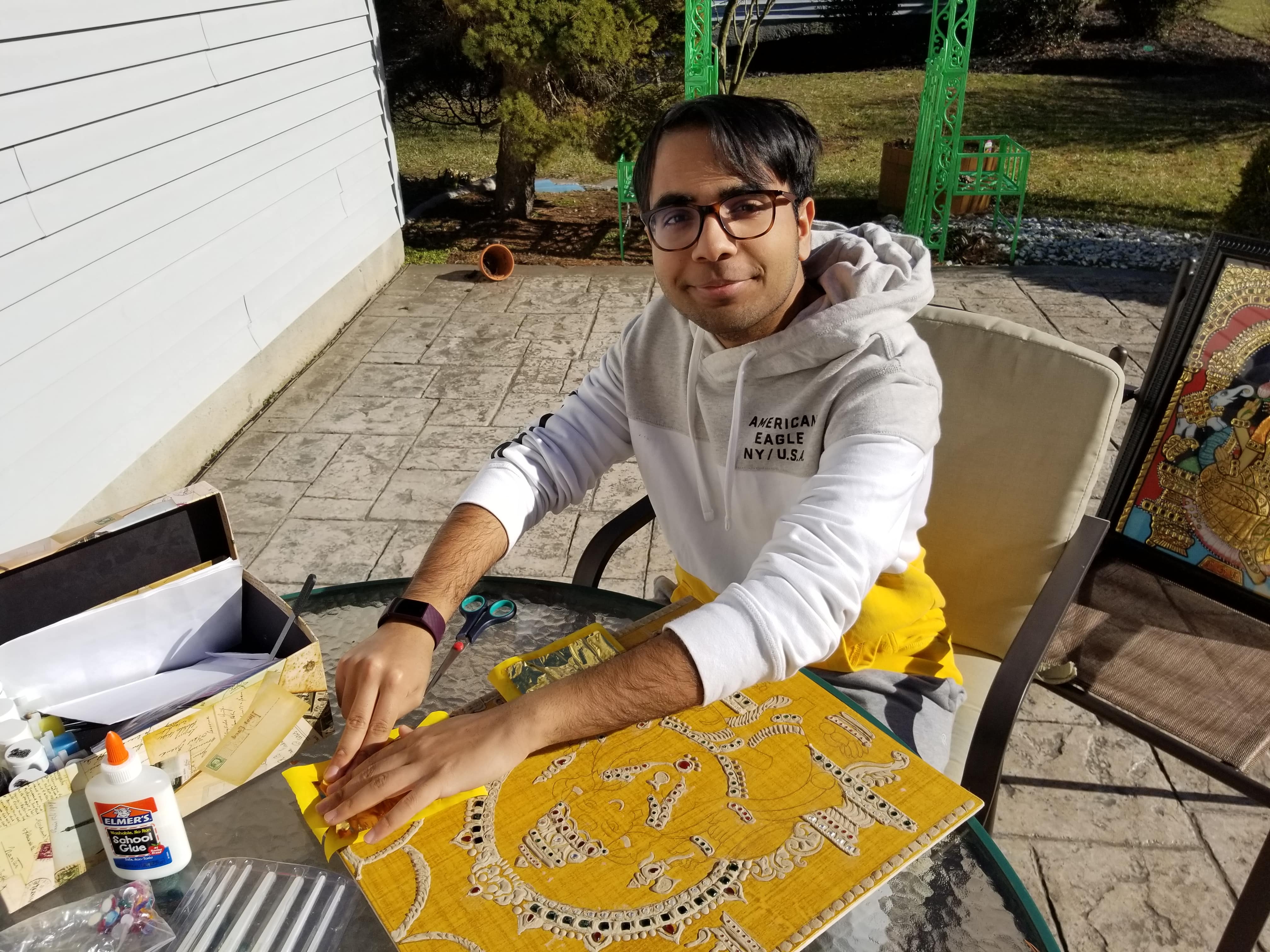
"My family and I are making a Tanjore painting of the Hindu God Ganesha. Ganesha is from Hindu Mythology and many people pray to Ganesha to help with overcoming obstacles. The process of making a Tanjore painting requires a lot of steps. First we draw a sketch with pencil on the canvas. Then we add a layer of soft clay and some gems and wait for it to harden. Then chip away at the harden clay and add a layer of gold paper(as shown in the pictures). Finally we paint and add some color!"

Sophie Fang


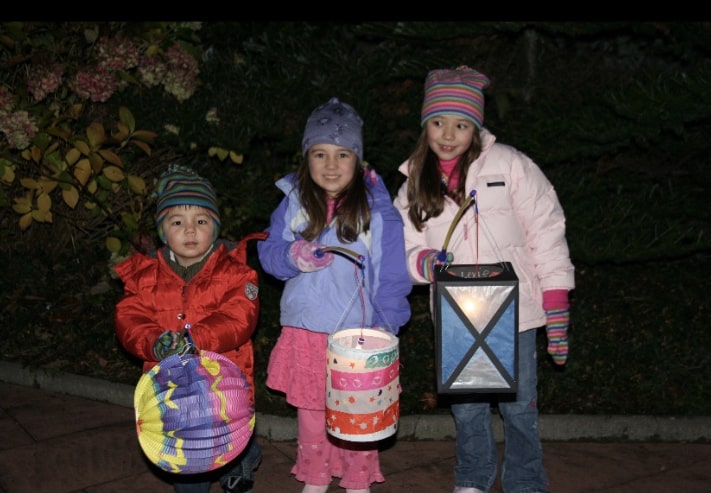
"This picture is of me and my siblings at a German festival called “Laternelaufen.” It’s celebrated on November 11th when children make lanterns and carry them to celebrate St.Martin (a bishop celebrated for helping people in poverty). Schools or churches organize walks and often children sing songs about St.Martin or lanterns. My siblings and I made our lanterns, sang, and walked along our classmates to celebrate. "

Callie LasCasas


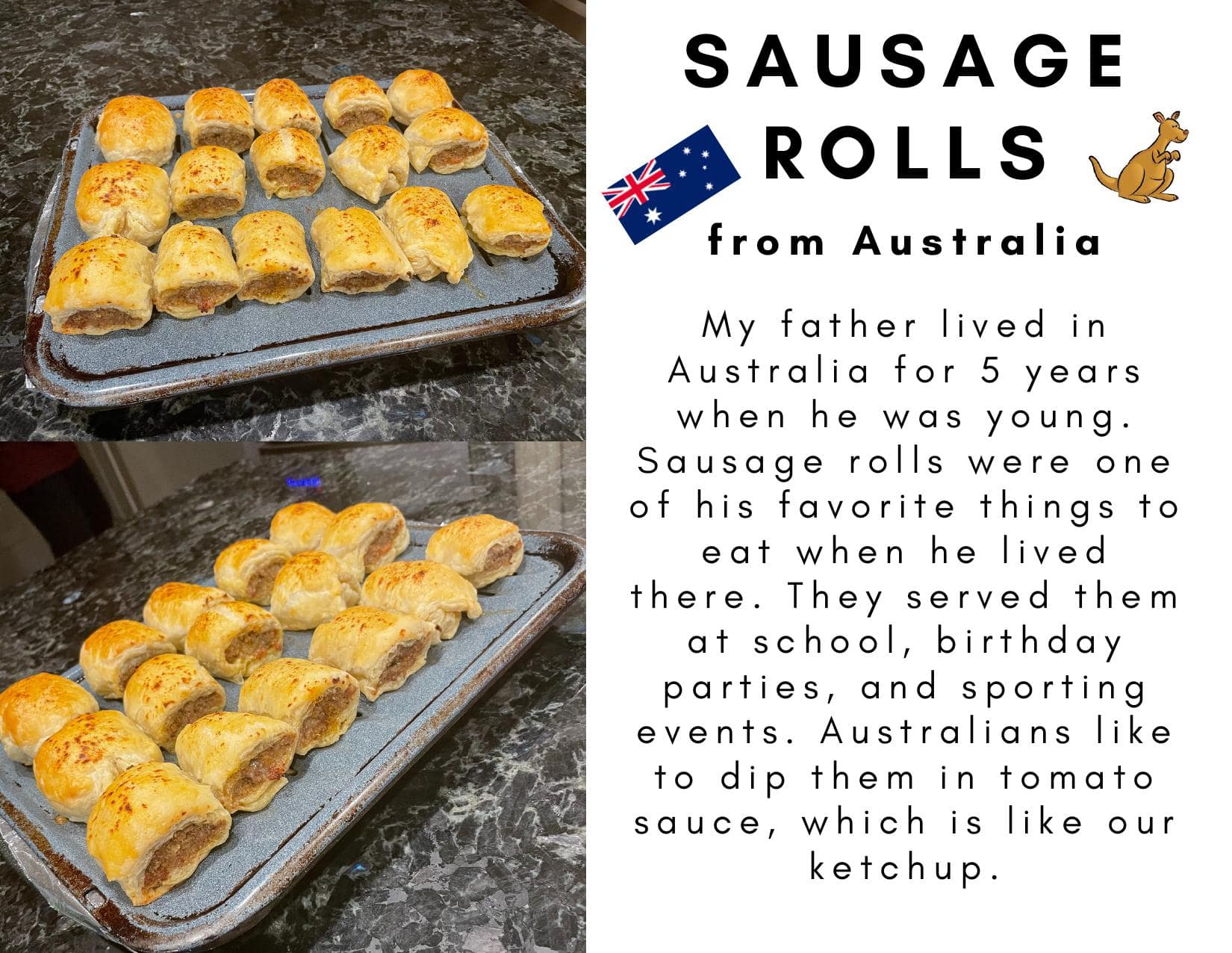
"Photo of an authentic Australian dish along with a story."

Avery Powers


"Wiener schnitzel, although originating from northern Italy, is actually one of Austria’s national dishes. Overtime, the Viennese have made it their own, perfecting their recipe and modes of preparation. It is a 3-6 ounce veal (meat of a calf) cutlet covered in a breaded crumble and fried until golden brown. It is popularly served with a few lemon slices and an Austrian vinegar potato salad. However, the most interesting part about wiener schnitzel is its cooking process. Before coating the meat in the breadcrumbs, one must tenderize it by hammering the cutlet with a meat mallet - effectively flattening it. It causes the dish to expand in surface area - sometimes being served to extend across the entirety of a large plate. Wiener schnitzel is prevalent among Viennese kitchens whether they be of taverns, posh restaurants, or common households. It is a staple meal throughout Austria and its name even indicates it as such; Wiener schnitzel meaning “Viennese schnitzel” as if patented and proclaimed as Austrian cultural property."

Tomas Germanas


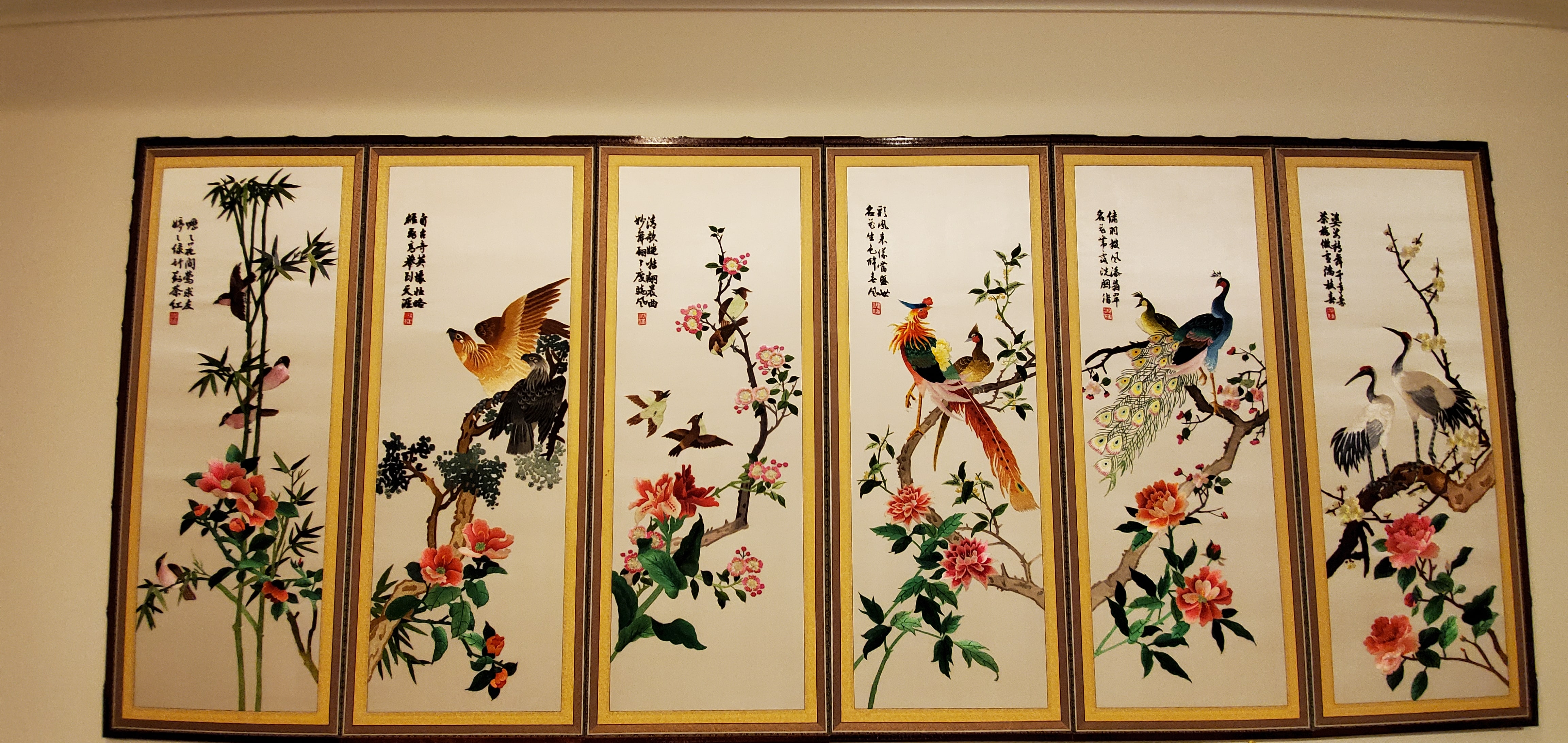
"The picture is of a Korean Byobu, an embroidered art piece on folding screens. The image depicts birds important to Korean Culture. The purpose of the piece is a room decoration. They are traditionally made by brides to bring to their new homes, though this specific one was made by a specialist."

David Huang


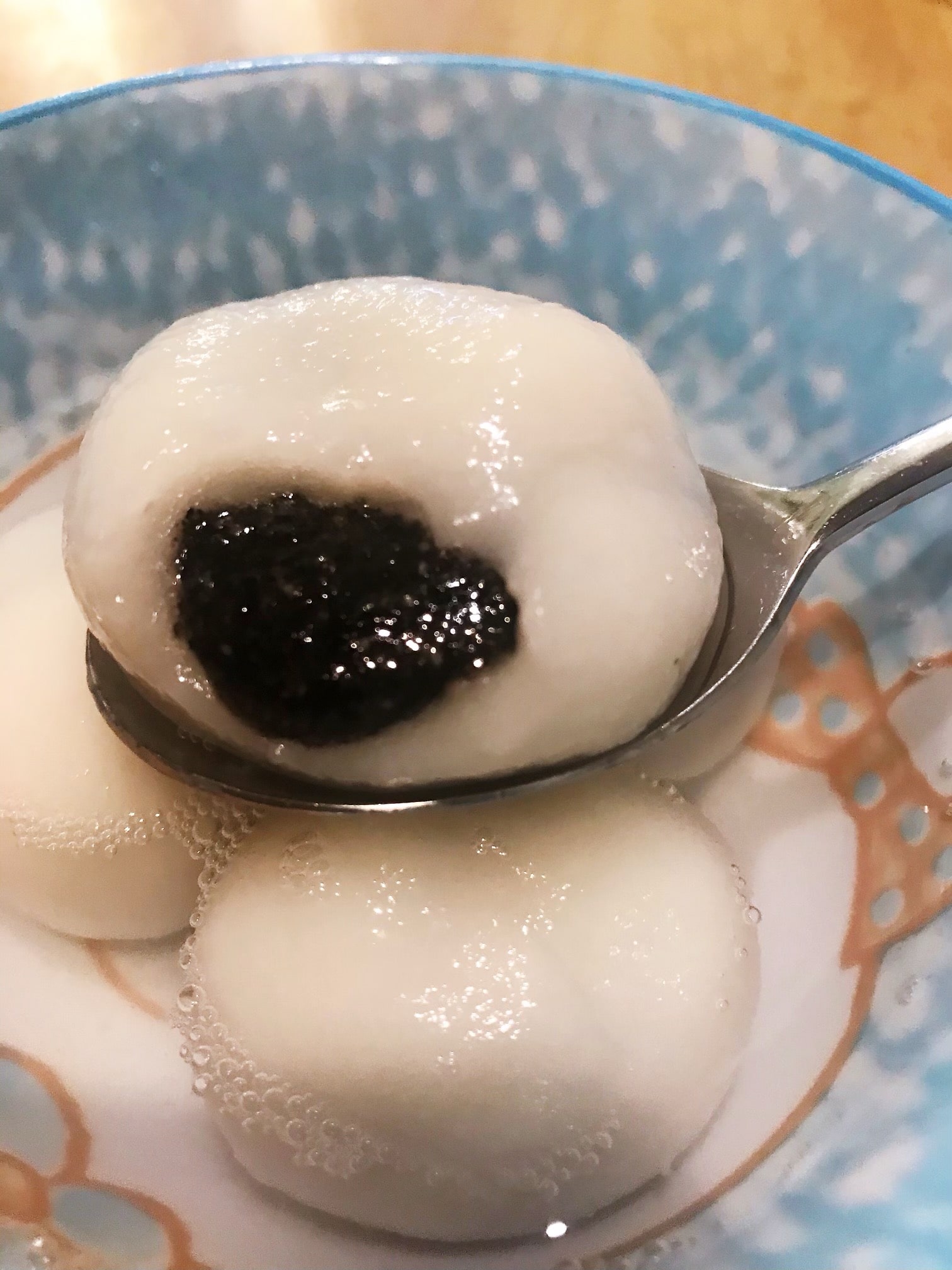
"The image presented here are sweet rice balls with sesame, which is a very important food in Chinese culture. They are commonly eaten during the Chinese New Year in order to celebrate the event. The food has a rice outside layer and a sweet sesame filling. They are generally served in warm and in bowls of water. The word in Chinese sounds similar to "get together," which is what is done when they are eaten. Furthermore, the round shape represents luck and prosperity in Chinese culture, and, when eaten during the Chinese New Year with family, means the new year will be very fortunate. Personally, my parents often make them during the holidays, although we sometimes eat them every now and then as a way to connect. Overall, the sweet rice balls with sesame are very important to Chinese culture and to me personally."

Emmeline Murphy


"I am submitting a poster board I have made about Ireland. It includes information about the Irish flag, religion in Ireland, Irish literature, and demographics. The information about Irish religion and Irish literature is especially relevant to cultural significance because they both relate the beliefs and important works of Irish people."

Praagna Kashyap


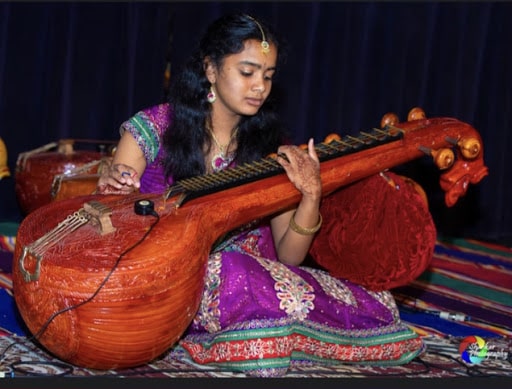
"In this photo, I am playing the veena, which is an Indian classical instrument. The veena is a large wooden instrument with 4 main strings, 3 drone strings, and 24 frets. Many veenas, like the one shown in the photo, are adorned with intricate wooden carvings that usually depict different Hindu stories or motifs. Carnatic music, which is the South Indian style of classical music, is an integral part of my culture and is believed to be a divine art form."

Katherine Roybal


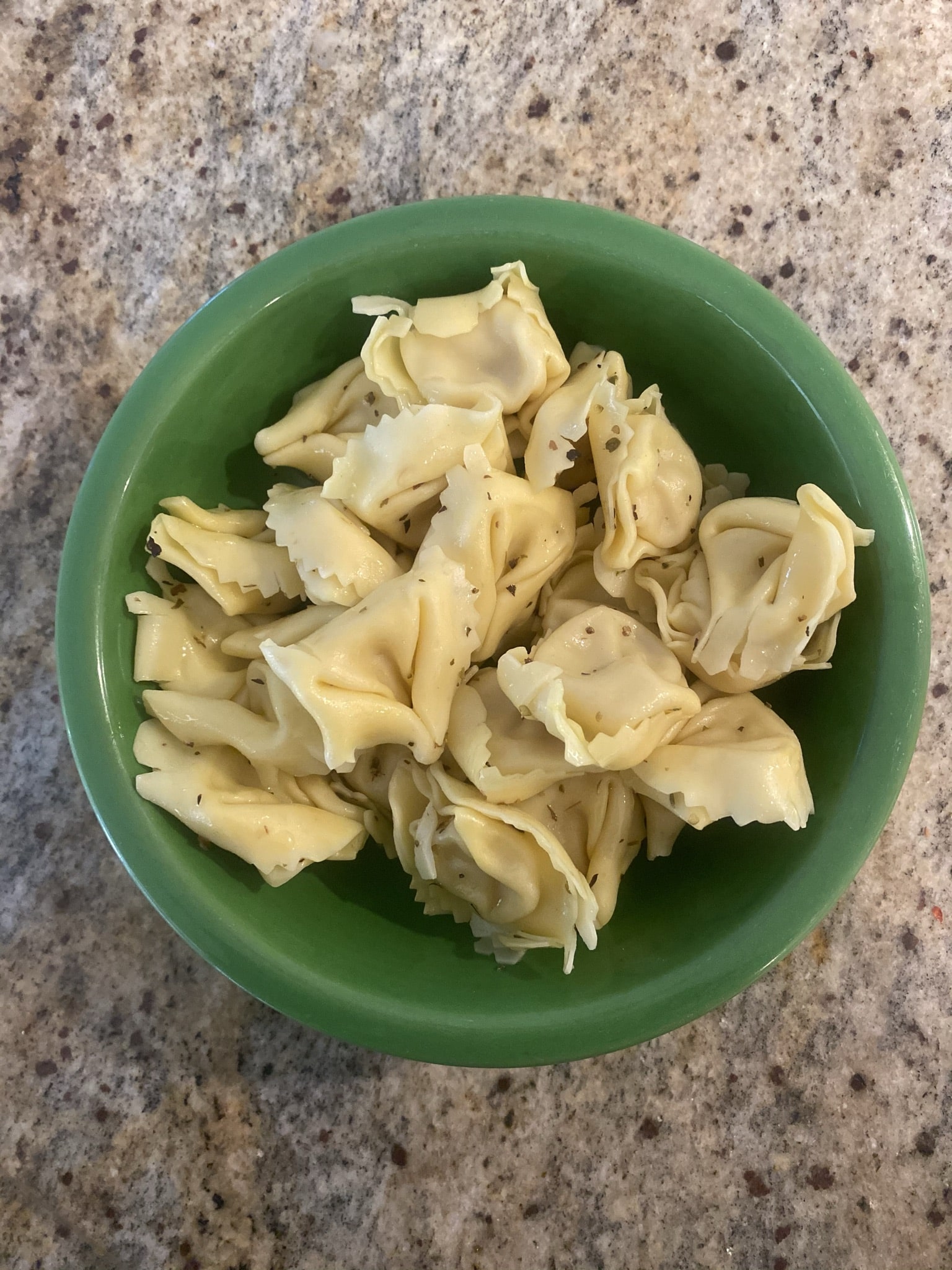
"This is Tortellini pasta, which is said to have originated in the town of Castelfranco Emilia, in the province of Modena. The legend of how it came to be varies, but one version of the story claims that Venus, the goddess of love spent a night at an inn in Castelfranco. The innkeeper saw her through her keyhole, and her beauty gave him immediate inspiration for Tortellini pasta, sculpted in the shape of her navel. Although the true origins of this pasta are unclear, the historical significance of this dish are well known. To this day, in Castelfranco Emilia, there is a festival held every year to celebrate the customary noodle."

Sumit Nawathe


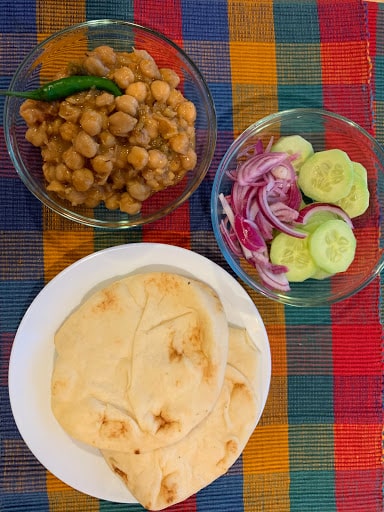
"This dish features a healthy mixture of chickpeas (or garbanzo beans), tomatoes, onion, and spices. A staple of North Indian cuisine, it can be served with rice or bread (here pictured with naan). It is made with a basic onion and tomato gravy, a teaspoon of ginger and garlic paste and some Indian spices such cumin, coriander, cloves and peppercorn."

Virtual Worldfest 2020 Gallery

Emmeline Murphy


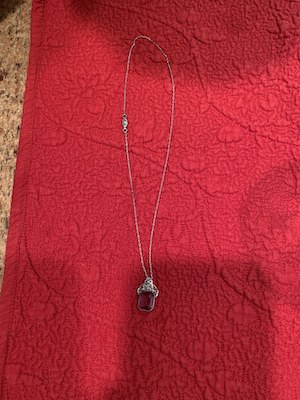
"This piece of jewelry is a gem surrounded by aluminum. This gem is also on an aluminum chain. The necklace is believed to be in my family pre-1880’s and to have existed at a time where aluminum was more expensive than gold. During the 1800s aluminium was very expensive due to its scarcity. Fun fact: the Washington Monument was capped in aluminum during the 1880s, and the cap was pretty costly."

Meher Bhamra


"The dance style is Bhangra, and it originates from the Punjab region in both India and Pakistan."

Olivia Reese


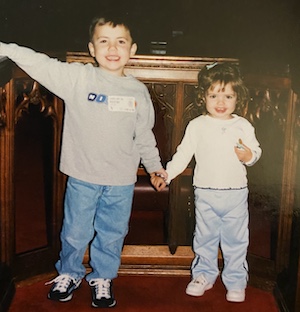
"This picture is of me and my brother in 2003 in the Canadian Parliament. We were on a private tour because my cousin was the head chef to the Prime Minister."

Natalie Keane


"This is braided challah! Challah is a Jewish bread that my family makes on Shabbat (and other major Jewish holidays). It is typically more golden in color because there are so many eggs in the dough. A round loaf like this one is typically made on Rosh Hashanah, the Jewish new year, to symbolize continuity. It has a rich flavor and a spongy, almost cake-like texture on the inside."

Keertik Bacon


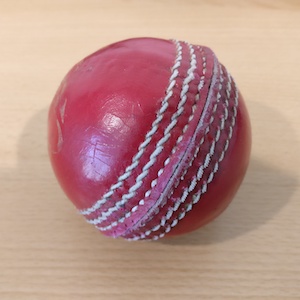
"Cricket is a big deal in India. People there follow it like how people in the US follow football. My family isn’t much different. My dad talks about how he played as a bowler when he was a kid. Two of my cousins, one of whom lives in England, and the other who lived in India and now lives in Texas, have played cricket on youth travel teams. They would often drag me into backyard cricket matches when they visited, and their dads, who also played cricket as kids, would jump in too. Cricket is pretty much a universal experience in India."

Amilee Huang


"This is an egg tart. It is a Hong Kong delicacy of sweet custardy goodness with a buttery, flaky pastry shell. The most memorable thing from Hong Kong is the smell when you pass by a bakery. The aroma of the freshly made bread and pastries are unlike those of any other. It is like the smell of freshly baked cookies but asian and better? The egg tart is not the only pastry which I love. There is also the pineapple bun which is a soft sweet bun filled with a sweet sugary custard in contrast to the crunchy scored top giving its name pineapple bun. I can't forget the iconic hot dog bun. It is simply a hotdog with a sweet bread around it, but somehow the simple combination is perfect."

Abigail Schlossberg


"This is eggplant parmesan which is a dish that comes from Italy. My great great grandma is from Genoa which is small city on the coast of Italy. Food plays a big role in italian families; dishes mainly consist of cheeses, tomatoes, and pastas/breads. The recipes are passed down from generation to generation."

Lilly Rainey


"My grandmother immigrated from Estonia to the United States in the 1950’s, and my family is strongly connected to our Estonian roots. In 2014, I had the privilege of attending the renowned Estonian Song and Dance Festivals. These celebrations are the largest gatherings in the country and occur every five years over the summer. The traditons started in 1869 and celebrate Estonian culture and identity. At the Dance Festival, private dance groups audition and practice their routines years in advance. Throughout the performance they move into different patterns like circles or lines that the crowds can see from above in their seats. The Song Festival occurs the next day and many dancers also sing at this event. Thousands of singers gather in the festival dome and the beautiful melodies can be heard for miles. A flame is lit on the Song Festival grounds and is carried through all the towns in the country, symbolizing unification. I will never forget this amazing experience that made me proud of my heritage."

Sakshi Gholap


"This outfit is also from India, traditionally worn to an event called "Garba". This is in celebration of a god and consists of dancing in circles with lots of people and music. The skirt also flys up while twirling around, and looks very beautiful. Overall, the outfit is full of jewels and hand embroidery, making each unique."

Anthony Duan


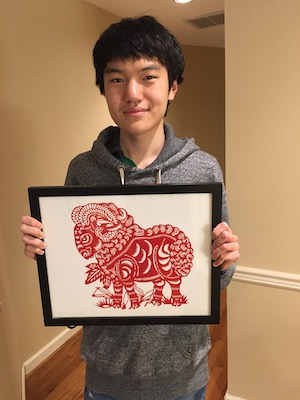
"Here I am holding something, something whose meaning I was not always aware of, and which might seem out of place in my otherwise Westernized life. When I was younger, I thought it was just a decoration, like a painting, but Asian. But over time, I gradually became more aware of what it symbolized. It is a connection between me and my ancestors, between my American family and my Chinese relatives. At first it merely appears Chinese: it's made of red paper, a traditional medium of Chinese handicraft, and is surrounded by the exaggerated, serrated edges typical of that art form. But it means something personal too. In the years of the Chinese zodiac, I was born in that of the goat, or "yang". My Chinese grandfather gave it to my parents at that time, as a reminder of what I was and what I came from. It was a way for him to leave a part of himself with us. It was a way to show that no matter what, despite being an ocean and continent away, we were still the same family, and that I was still its little goat. And in Chinese culture, a family cannot be broken. It must stay together, and this little red goat is a sense of our family's continuation, continuing to move, just as the years and the zodiac themselves do. Things change, but they never end."
Seohyun Park


"I created this video which presents a part of Korean culture. I am wear Hanbok which is traditional Korean attire worn on special occasions. I took a fun twist to it and made it from a trending social media outlet to make it a bit more interesting!"

Apoorva Ajith


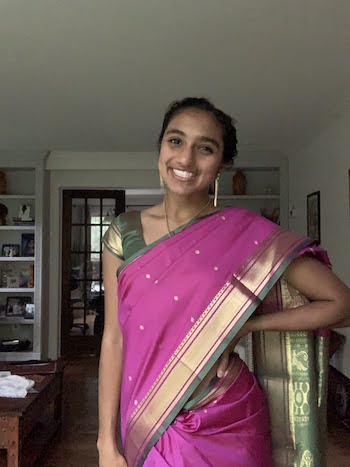
"This is a nauvari, also called kaashta, sari from the state of Maharashtra, India. Most saris are seven yards long and are draped and pleated to form a skirt-like outfit. Different regions in India all have different traditional ways of draping saris. "Nauv" means nine in Marathi, the official language of Maharashtra, and this sari is nine yards long instead of seven. This extra length allows it to be pleated and tucked into a loose pants style. I'm only half Maharashtran, but I appreciate this chance to share my culture with you!"

Reshma Jasmin


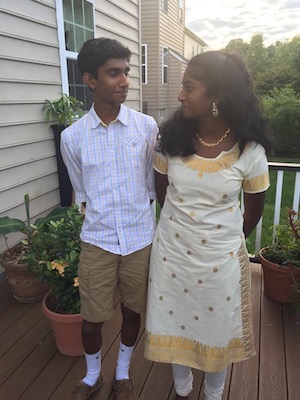
"I am wearing a gold necklace my late grandfather gifted my mother, and in the background, you can see several plants native to Kerala, such as a banana plant, a jasmine plant, and a kanthari(small pepper) plant on my deck. This is a photo of me wearing the traditional onam churidar. Onam is a traditionally Hindu holiday celebrated in Kerala, but Malayalis of all faiths still celebrate it. The classic onam colors are cream/off -white and gold. To celebrate Onam, we dress in traditional clothes, use flowers to create a large mandala, and prepare/eat an Onam Sadya (meal)."

John Sedor


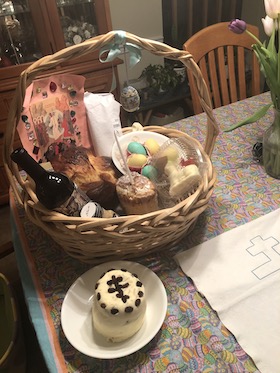
"Attached is a photo of my family's Pascha basket, part of the traditional Russian Orthodox Pascha (Easter) celebration. The basket contains eggs, bacon, ham, cheese, Pascha bread, kulich (sweet bread), salt, and kielbasa (traditional Slavic sausage). It also has a candle and an Icon of Jesus' resurrection. We make this every year to be blessed and then eaten after the Paschal church service, which happens at midnight on Easter. It means a lot this year as we are unable to go to church. It is very important, as all the elements are symbolic of elements of the Orthodox faith, as well as the fact that we fast from meat and cheese for all of Lent (40-50 days). It is a very exciting time when Pascha comes around and we can eat meat again."

Julia Berkeley


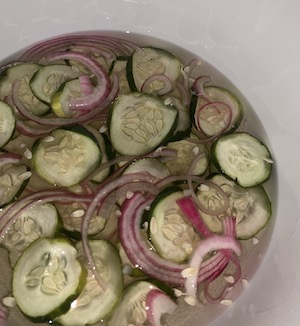
"My family first came to America from Germany in the early 1900s. My great grandparents were some of the first in their families to be born in America. These pickles are my great-grandma’s recipe. The pickle is traditionally a huge part of German culture. Most German food is pickled and high in vinegar content such as sauerkraut or pickles. Additionally in German culture, on Christmas, a glass pickle ornament is hidden on the tree, and the first child that finds it gets a special present or a treat. We still make these traditional German pickles today to honor our culture and where we came from."

Constanza Montemayor


"Here is a photo of my twin brother, Carlos, holding a beheaded tiger piñata at on our birthday. Although a cursed image, it remains cultural. In Mexico, piñatas are a traditional decoration and activity for nearly any joyful celebration, including birthdays and New Years. Traditionally, they are paper mâché, cardboard, and wire constructions in the shape of stars with ribbons hanging down from the tips. However, they have been modernized and now often depict characters, animals, objects, and various pop culture figures, and come in a variety of colors. During a celebration, one person fills the piñata with candy or gifts and keeps it hung on a string above the guests' heads, and the guests take turns hitting it with a broomstick until the candy spills out, which they then collect. Carlos hit this piñata a bit too hard and it flew right off the string with its head off, but after re-hanging it and a few more turns, candy spilled out as planned."
Josh Oberly


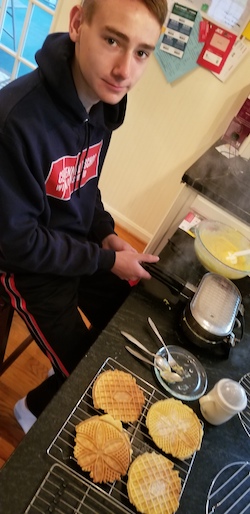
"I have made an Italian dessert called a pizzelle that my Italian grandmother often makes. It is a cookie that uses anise (similar in taste to liquorice but better) for flavor, and cooked in a tiny waffle iron device where it is pressed thin."

Anika Huang


"This is a TikTok that my sister and I made to celebrate a bit of our culture. I am Chinese and the outfit that I am wearing (in the last part of the video) is a cheongsam/qipao, a traditional Chinese dress. It was originally popularized by the Manchus during the Qing dynasty and at the time was called changpao. It was generally a fairly loose fit that hung in an A-line shape. It has since been modernized and adapted to a tighter fit and a higher slit. This new version was popularized by celebrities and high class members of society. Today, many versions of this traditional dress can be found. Most of them feature a delicate floral pattern, but there are many alternative designs from solid colors to polka dots to anything in between. It is an extremely popular article of clothing during festive seasons like the Lunar New Year and a typical garment worn by the bride during at least a part of her wedding."

Annie Liu


"In this video for the dance titled Remembrance I am using a fan a traditional Chinese prop in art forms including opera and acrobatics. Chinese dance costumes in the modern day vary widely, and a common type consists of loose fitting pants and a top while others are more elaborate and consist of multi-layer dresses/parts. Due to Westernization there has been a delicious mixing of ballet and Chinese dance, hip hop, and such and we shall look forward to what the future brings!"

Genevieve Lee


"In the United States, the wintertime festivities come to a close after New Years, but in Spain, this is not the case, as kids eagerly await the arrival of los reyes magos, or the three kings on January 6th. It is believed that this is the day that the three wise men, called Gaspar, Baltasar, and Melchor in Spanish, visited baby Jesus and gave him gifts. The festivities begin on January 5th, and the streets become filled with people, as they observe the parade processions and await the calbagatas de los reyes magos, which are huge floats that show reenactments of each of the three kings. The procession also includes musicians and other cabalgatas with children who throw candy and goodies into the crowd. Later , on the evening of January 6th, children lay out food for the reyes magos to eat and also leave their shoes out for the reyes magos to put candy in."

Stefan Cehan


"This is traditional Romanian folk clothing. Traditional male clothing consists of white pants tucked into boots along with an embroidered sash and shirt with a conic woolen cap. Females traditionally wear an embroidered white petticoat over a wrap skirt in addition to an embroidered blouse and scarf which is worn around the head."

Daria Cara


"This is me in my traditional Romanian costume, consisting of an ie (shirt), fotă (skirt), maramă (head covering), and brâu (belt / wrap). This is the traditional fashion I would have worn to Worldfest, so I am glad to be able to share it digitally."

Diego Montemayor


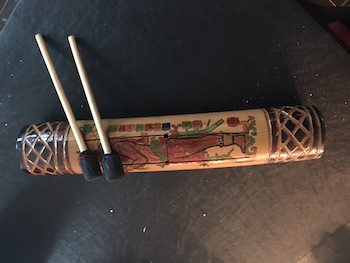
"This is the tunkul, or teponaztli, an Aztec and Mayan slit drum made from a hollowed out wooden log that is hit with small drumsticks. This version is especially extravagant but it can be a simple as a cylindrical, hollow log with slits. It is played by hitting the log on the least fixed points, which is why there are slits, producing a louder sound than a typical log would. Historically, it is typically played in dances and performances, and I have personally played it at the world festival at Centennial Lane Elementary School when I was in 4th grade."

Joohee Na


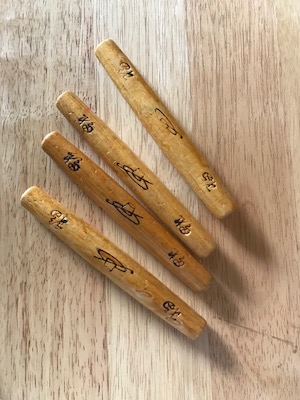
"These wooden sticks may not seem much, but looks can be very deceiving— known as “Yut Nori”, this is a traditional Korean game played during New Years. First introduced all the way back in 57 BC, its value and entertainment still maintains in the 21st century. My family has our own tradition to play this during New Years and it’s very fun!"